Rush Never Asked Me to Like It. That Is Exactly Why I Fell for It

By Vishnu
 6
6 0
0I did not walk into Rush expecting devotion. I expected speed. Noise. Craft. Maybe admiration. What I did not expect was surrender. Rush does not perform tricks to win you over. It does not raise its voice to demand attention. It simply places two men in front of you and lets them breathe. Somewhere between that breathing and the silence around it, you fall in love with the film without realizing the moment it happened.
That is the difference.
When I watched F1, I knew exactly what it wanted from me. Respect. Excitement. Applause. It delivered all of that with precision. It is a technically assured film that understands modern spectacle perfectly. But Rush operates on a different frequency. It is not interested in your applause. It is interested in your patience.
Rush is not about racing. Racing is merely the environment where its real questions live. The film is about obsession and the cost of it. About two philosophies crashing into each other again and again at impossible speeds. About how winning and surviving are not always the same ambition.
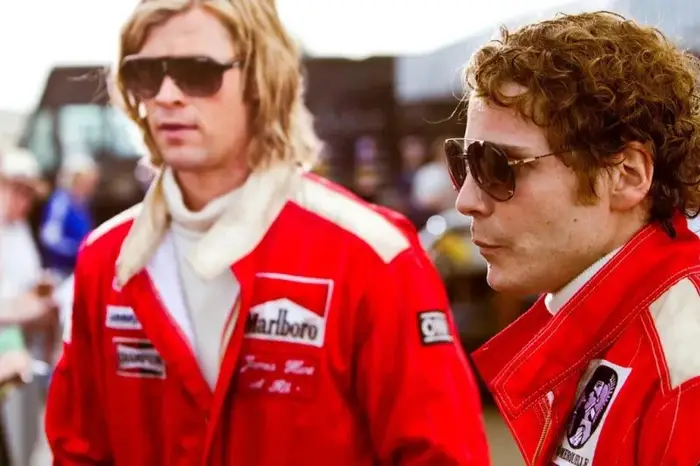
James Hunt and Niki Lauda are not constructed as cinematic opposites for easy drama. They are human contradictions. Hunt lives as if time is generous. He drinks. He laughs. He races like pleasure itself is the reward. Lauda lives as if time is expensive. He plans. He calculates. He races like survival is a science.
Rush does not crown one as superior.
It lets them exist.
That choice alone separates it from most sports films. There is no moral scoreboard. No obvious lesson wrapped neatly by the final lap. The film trusts the audience to sit with discomfort and draw their own understanding. That trust is radical today.
F1 by contrast is confident and curated. Its protagonist is shaped carefully. His flaws are visible but safe. His journey is engineered for uplift. The emotional beats arrive on schedule. It is cinema that knows its destination from the opening frame.
Rush does not rush toward meaning.
It wanders.
And in that wandering, it feels alive.
One of the most striking things about Rush is its rhythm. It knows when to slow down. It allows scenes to exist without urgency. Conversations linger. Faces stay in frame longer than expected. You are allowed to observe instead of react.
The racing sequences are intense but they are never drunk on their own brilliance. The camera respects danger instead of fetishizing it. You feel fear not because the film tells you to but because it refuses to decorate it.
When Lauda crashes, the film does not use pain as a stepping stone toward heroism. It treats pain as permanent. His suffering does not disappear once the plot moves on. It changes how he speaks. How he holds himself. How he looks at the world. There is no cinematic shortcut around it.
In F1, pain functions differently. It is motivational. It exists to be conquered. It sharpens the comeback. This is effective storytelling. But it is also familiar.
Rush is not interested in familiarity.
It is interested in truth.
Perhaps the most humane choice Rush makes is in how it frames rivalry. Hunt is not Lauda’s villain. Lauda is not Hunt’s obstacle. They are mirrors reflecting each other’s extremes. Their rivalry is intimate. Competitive. Occasionally cruel. But never hollow.
There is respect beneath the tension even when ego clouds it. The film understands that some relationships do not need reconciliation to be meaningful. Some people shape you simply by existing in opposition to you.
That idea is rarely explored with such restraint.
F1 creates conflict to fuel momentum. Rush allows conflict to exist because life allows it. There is no forced catharsis. No dramatic moral resolution. Just two men who needed each other more than they ever admitted.
Even the filmmaking choices echo this philosophy. Ron Howard’s direction never begs for attention. The film does not announce its intelligence. It lets scenes speak. It trusts silence. It understands that the loudest truths often arrive quietly.
F1 is visually immaculate. The camera glides. The sound design roars. You are constantly aware of the craft. Rush makes you forget the craft entirely. You believe the world. You forget the lens.
That difference lingers.
When Rush ends, you do not feel the rush of having watched something thrilling. You feel a strange stillness. A sense that you have witnessed something honest. Something that did not need to impress you to stay with you.
It did not force me to like it.
It did not persuade me.
It waited.
And somewhere along the way, without realizing when, I leaned in.
F1 is a film you admire while watching.
Rush is a film that quietly takes a seat inside you.
And long after the engines stop, it keeps running.
Vroom Vroom
Rush Never Asked Me to Like It. That Is Exactly Why I Fell for It
By Vishnu
60I did not walk into Rush expecting devotion. I expected speed. Noise. Craft. Maybe admiration. What I did not expect was surrender. Rush does not perform tricks to win you over. It does not raise its voice to demand attention. It simply places two men in front of you and lets them breathe. Somewhere between that breathing and the silence around it, you fall in love with the film without realizing the moment it happened.
That is the difference.
When I watched F1, I knew exactly what it wanted from me. Respect. Excitement. Applause. It delivered all of that with precision. It is a technically assured film that understands modern spectacle perfectly. But Rush operates on a different frequency. It is not interested in your applause. It is interested in your patience.
Rush is not about racing. Racing is merely the environment where its real questions live. The film is about obsession and the cost of it. About two philosophies crashing into each other again and again at impossible speeds. About how winning and surviving are not always the same ambition.
James Hunt and Niki Lauda are not constructed as cinematic opposites for easy drama. They are human contradictions. Hunt lives as if time is generous. He drinks. He laughs. He races like pleasure itself is the reward. Lauda lives as if time is expensive. He plans. He calculates. He races like survival is a science.
Rush does not crown one as superior.
It lets them exist.
That choice alone separates it from most sports films. There is no moral scoreboard. No obvious lesson wrapped neatly by the final lap. The film trusts the audience to sit with discomfort and draw their own understanding. That trust is radical today.
F1 by contrast is confident and curated. Its protagonist is shaped carefully. His flaws are visible but safe. His journey is engineered for uplift. The emotional beats arrive on schedule. It is cinema that knows its destination from the opening frame.
Rush does not rush toward meaning.
It wanders.
And in that wandering, it feels alive.
One of the most striking things about Rush is its rhythm. It knows when to slow down. It allows scenes to exist without urgency. Conversations linger. Faces stay in frame longer than expected. You are allowed to observe instead of react.
The racing sequences are intense but they are never drunk on their own brilliance. The camera respects danger instead of fetishizing it. You feel fear not because the film tells you to but because it refuses to decorate it.
When Lauda crashes, the film does not use pain as a stepping stone toward heroism. It treats pain as permanent. His suffering does not disappear once the plot moves on. It changes how he speaks. How he holds himself. How he looks at the world. There is no cinematic shortcut around it.
In F1, pain functions differently. It is motivational. It exists to be conquered. It sharpens the comeback. This is effective storytelling. But it is also familiar.
Rush is not interested in familiarity.
It is interested in truth.
Perhaps the most humane choice Rush makes is in how it frames rivalry. Hunt is not Lauda’s villain. Lauda is not Hunt’s obstacle. They are mirrors reflecting each other’s extremes. Their rivalry is intimate. Competitive. Occasionally cruel. But never hollow.
There is respect beneath the tension even when ego clouds it. The film understands that some relationships do not need reconciliation to be meaningful. Some people shape you simply by existing in opposition to you.
That idea is rarely explored with such restraint.
F1 creates conflict to fuel momentum. Rush allows conflict to exist because life allows it. There is no forced catharsis. No dramatic moral resolution. Just two men who needed each other more than they ever admitted.
Even the filmmaking choices echo this philosophy. Ron Howard’s direction never begs for attention. The film does not announce its intelligence. It lets scenes speak. It trusts silence. It understands that the loudest truths often arrive quietly.
F1 is visually immaculate. The camera glides. The sound design roars. You are constantly aware of the craft. Rush makes you forget the craft entirely. You believe the world. You forget the lens.
That difference lingers.
When Rush ends, you do not feel the rush of having watched something thrilling. You feel a strange stillness. A sense that you have witnessed something honest. Something that did not need to impress you to stay with you.
It did not force me to like it.
It did not persuade me.
It waited.
And somewhere along the way, without realizing when, I leaned in.
F1 is a film you admire while watching.
Rush is a film that quietly takes a seat inside you.
And long after the engines stop, it keeps running.
Vroom Vroom
Comments
Loading comments...

Comments
Loading comments...